
Converting from Gas to Electric Hot Water: What Wellington Homeowners Need to Know
If your home uses gas for hot water, you may be wondering whether now is the time to switch to electric. With New Zealand’s natural gas supply declining, energy costs under pressure and uncertainty about future gas prices, more homeowners are considering alternatives.
The good news is that converting from gas hot water to electric hot water is often a straightforward process. Depending on your home, household size and hot water requirements, you could replace your existing gas system with an electric infinity water heater, a traditional electric hot water cylinder or a hot water heat pump.
At Plumb Plumbing, we help homeowners across Wellington, Porirua and Lower Hutt make the switch. In this guide, we’ll explain your options, what the conversion involves and how to choose the right system for your home.
Why Are More New Zealanders Switching from Gas to Electric Hot Water?
There are several reasons homeowners are looking at alternatives to gas hot water.
1. New Zealand’s natural gas supply is declining
New Zealand’s domestic natural gas production has fallen significantly in recent years, and major gas fields are reaching maturity. While gas is not disappearing overnight, the future of supply is uncertain.
Industry research has highlighted the potential for tighter supply and higher prices in the years ahead. This is prompting households to think about their long-term energy choices rather than simply replacing their existing gas appliances like for like.
2. Gas prices and daily connection charges add up
When comparing gas and electricity, it’s important to look beyond the cost of the energy you use.
If you have gas connected solely to heat your water, you may be paying a daily gas connection charge as well as the cost of the gas itself. These fixed charges continue even when your household uses relatively little hot water.
Switching to electric hot water and disconnecting your gas supply altogether could eliminate those gas connection charges. The potential savings depend on your current gas and electricity plans, hot water usage and the cost of installing your new system.
3. It’s an opportunity to choose a more efficient system
Modern electric hot water systems offer several options to suit different homes and budgets.
A standard electric hot water cylinder is often the simplest replacement, while a hot water heat pump can use considerably less electricity than a conventional electric cylinder. Electric infinity systems are another option for households that prefer heating water on demand.
Choosing the right system now can help you manage ongoing energy costs and reduce your reliance on natural gas.
What Are Your Options for Replacing Gas Hot Water?
There isn’t one solution that suits every home. Here are the three main options to consider when converting from gas to electric hot water.
Option 1: Electric infinity hot water
If your current system is a gas infinity water heater, you may be interested in replacing it with an electric infinity system.
An infinity system heats water as it flows through the unit rather than storing hot water in a cylinder. This means you don’t need a large storage tank, and you can continue using hot water on demand.
However, electric infinity systems have different electrical requirements from gas systems. They can require a substantial electrical supply, and the suitability of your existing switchboard and wiring needs to be assessed before installation.
Best suited to: Homes where space is limited and an appropriately sized electrical supply is available.
Option 2: A standard electric hot water cylinder
A traditional electric hot water cylinder stores heated water ready for use. It is a popular option for households switching away from gas because it is a well-established technology with a relatively straightforward installation in many homes.
Cylinders are available in different sizes, including options suitable for larger households. Depending on your property, the cylinder can be installed indoors or in an outdoor location.
One advantage of a storage cylinder is that it can provide a strong supply of hot water to multiple outlets, provided the system is correctly sized and configured.
When selecting a cylinder, we’ll consider the number of people in your household, your usual hot water usage, available space and the existing plumbing.
Best suited to: Households wanting a practical, familiar and generally lower-upfront-cost electric hot water solution.
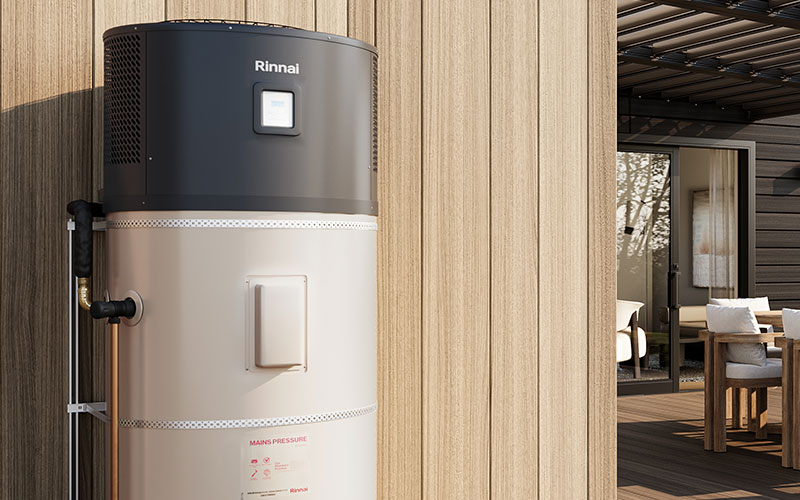
Option 3: A hot water heat pump
A hot water heat pump uses heat from the surrounding air to heat water, rather than relying solely on conventional electric resistance heating.
This makes it significantly more energy-efficient than a standard electric hot water cylinder. Although the initial purchase and installation cost is generally higher, the reduced electricity consumption can make a heat pump an attractive option over the longer term.
The best system will depend on your household’s hot water demand, installation space, budget and the suitability of the location.
Best suited to: Homeowners who want to reduce electricity consumption and are prepared to invest more upfront to potentially save on running costs.
Which Electric Hot Water System Is Best for Your Home?
Here’s a quick comparison of the main options.
| Feature | Electric infinity | Electric cylinder | Hot water heat pump |
|---|---|---|---|
| Stores hot water | No | Yes | Yes |
| Upfront cost | Depends on electrical work and system | Generally lower | Generally higher |
| Running costs | Depends on usage and electricity tariff | Generally higher than a heat pump | Generally lowest of the three |
| Space requirements | Compact unit | Requires cylinder space | Requires space for the system and airflow |
| Electrical considerations | Can require a substantial supply | Usually more straightforward | Depends on the model and installation |
The right choice depends on more than the appliance price alone. Electrical upgrades, plumbing alterations, available space and the cost of disconnecting gas can all affect the total installation cost.
It’s worth comparing both the upfront investment and expected running costs before deciding.
How Much Does It Cost to Convert from Gas to Electric Hot Water?
The cost of converting from gas to electric hot water varies from one property to another.
The main factors affecting the price include:
- Your new hot water system: The cost will depend on whether you choose an electric infinity unit, a standard cylinder or a heat pump.
- Electrical work: Your home may need a new dedicated power supply, additional wiring or switchboard upgrades.
- Plumbing alterations: Pipework may need to be modified to suit the new system or its location.
- Installation location: Installing a cylinder indoors, outdoors or in a different part of the property can affect labour and materials.
- Gas disconnection: If you’re removing your last gas appliance, you may also need to arrange permanent disconnection of your gas supply.
A standard electric cylinder will generally have a lower upfront cost than a hot water heat pump, but the heat pump may offer lower running costs over time.
For a meaningful comparison, it’s best to get a quote based on your actual property and requirements rather than relying on a generic price.
At Plumb Plumbing, we can assess your existing system, discuss suitable alternatives and explain the work involved before you commit.
What Is Involved in Converting from Gas Hot Water to Electric?
Many gas-to-electric hot water conversions can be completed within a day, although the timeframe depends on the property and the work required.
Here’s how the process typically works.
Step 1: Assess your existing system and household needs
First, we’ll look at your current gas hot water system, your home’s plumbing and electrical setup, the available installation locations and your household’s hot water requirements.
We’ll discuss the different options and help you choose a system that makes sense for your home.
Step 2: Arrange the necessary electrical work
An electric hot water system needs a suitable electrical supply. Depending on the system and your existing installation, additional wiring or other electrical work may be required.
We coordinate with a licensed electrician to ensure the electrical requirements are addressed as part of the conversion.
Step 3: Disconnect and remove the gas hot water system
Your existing gas water heater will be safely disconnected and removed.
If you still use gas for cooking, heating or another appliance, the supply can generally be isolated to the hot water system while your other appliances remain connected.
If hot water is your last remaining use of gas, you’ll need to arrange the appropriate gas disconnection and any necessary work to permanently disconnect the property from the gas network. We can help coordinate this process.
Step 4: Install your new electric hot water system
Your new system will be installed and connected to the appropriate plumbing and electrical services. Any required changes to pipework, valves and fittings will be completed as part of the job.
Step 5: Test the system and check everything is working
Before the job is complete, we’ll check the installation and test the system to ensure it is operating correctly and safely.
We also arrange disposal of the old equipment as part of our service.
Our aim is to make the changeover as straightforward as possible, with minimal disruption to your household.
Can You Switch from Gas Infinity to an Electric Hot Water Cylinder?
Yes. You don’t have to replace your gas infinity system with another infinity system.
In fact, switching from gas infinity to an electric hot water cylinder is a common conversion option worth considering.
The main difference is that a cylinder stores hot water, whereas an infinity system heats water as it is needed. This means you’ll need to consider where the cylinder could go and what size would suit your household.
An outdoor cylinder may be a practical solution if you don’t have enough room inside your home.
We’ll assess the available space, plumbing layout and hot water requirements to help determine whether this option is suitable.
Should You Disconnect Your Gas Supply Completely?
If you use gas only for hot water, switching to electric may allow you to eliminate your gas connection altogether.
This can be particularly worthwhile because you may no longer need to pay daily gas connection charges.
However, if your home also uses gas for cooking or space heating, you’ll need to decide whether to keep those appliances or transition them to electric alternatives as well.
If you decide to remove your final gas appliance, the gas supply must be disconnected through the appropriate provider and qualified professionals. Simply removing the hot water unit does not necessarily end your gas account or connection charges.
We’ll explain the options for your situation so you can make an informed decision.
Is Now a Good Time to Switch from Gas to Electric Hot Water?
For many households, it’s worth investigating the switch now rather than waiting for their gas hot water system to fail.
New Zealand’s changing gas supply outlook makes future costs uncertain, and replacing a failing appliance gives you an opportunity to consider alternatives before you’re forced to make a quick decision.
If your current gas water heater is nearing the end of its life, planning ahead can give you time to compare systems, understand the installation requirements and budget for the conversion.
You don’t necessarily need to change everything in your home at once. You can start by replacing your gas hot water system and consider other appliances separately.
The best approach is to compare the full cost of each option, including installation, ongoing energy use and any gas charges you could avoid.
Convert from Gas to Electric Hot Water with Plumb Plumbing
If you’re considering converting from gas hot water to electric, Plumb Plumbing can help you understand your options and organise the changeover.
We provide gas-to-electric hot water conversions for residential customers across Wellington, Porirua and Lower Hutt.
With more than 25 years of experience, we can assess your existing setup, explain the pros and cons of different systems and coordinate the plumbing, electrical and gas disconnection work required.
In many cases, the conversion can be completed within a day. We’ll confirm the likely timeframe and requirements for your property before the work begins.
We regularly work with our trusted gasfitters and electricians and can arrange their services as part of your conversion. Alternatively, you’re welcome to use your own preferred tradespeople. We’ll work with you to make the changeover as straightforward as possible.
Ready to find out what switching from gas to electric hot water would involve at your home?
Call Craig on 027 310 9399 to discuss your options or arrange an assessment or send us a message through our contact form.
Plumb Plumbing — experienced plumbing services across Wellington, Porirua and Lower Hutt.
Further information
For more information about New Zealand’s changing gas market and hot water options, see:
- Plumb Plumbing: Converting from Gas Hot Water to Electric
- EECA: Hot water heat pumps in the home
- Consumer NZ: Guide to getting off gas
This article provides general information. System suitability, installation costs and potential savings depend on the individual property and household.

Leave a Reply
Want to join the discussion?Feel free to contribute!